
PROTAC for Neuroscience
Advancing therapeutic solutions for neurodegenerative diseases through targeted protein degradation
Need Help?

- Revolutionary Cancer Treatment Approach
A wide range of neurodegenerative diseases affect the central nervous system (CNS) and lead to impaired sensory, motor, and cognitive processes. This impairment can lead to permanent damage to neuronal health and eventual neuronal death. The complex disease pathophysiology and poorly studied underlying mechanisms have led to an increase in therapeutic efforts, which have historically been proven to be difficult.
PROteolysis TArgeting Chimera (PROTAC®) protein degraders open up new and exciting opportunities for degrading disease-causing mutants and protein aggregates, starting with tauopathies and synucleinopathies. Some hallmarks of the new generation of PROTACs are improved pharmacology to cross the blood-brain barrier (BBB), increased catalytic activity to break down aggregates to prevent diffusion to healthy neurons, and the ability to adapt to new delivery mechanisms.
Key Insight
There is ample evidence that large protein aggregates are proteasome-resistant, so PROTACs that selectively drive degradation through the autophagosomal mechanism can significantly improve therapeutic outcomes.
- Tauopathies Research
Groundbreaking Research
Therapeutic Promise
This study signals a new era in drug development targeting tau pathology, offering hope for effective treatments in neurodegenerative diseases.
- Service Highlights
Multiple Ranking Approaches
Multiple approaches to rank PROTAC variants
Fast & Sensitive
Rapid analysis with high sensitivity
Orthogonal Correlation
Correlate activity with orthogonal assays
Ternary Complex Analysis
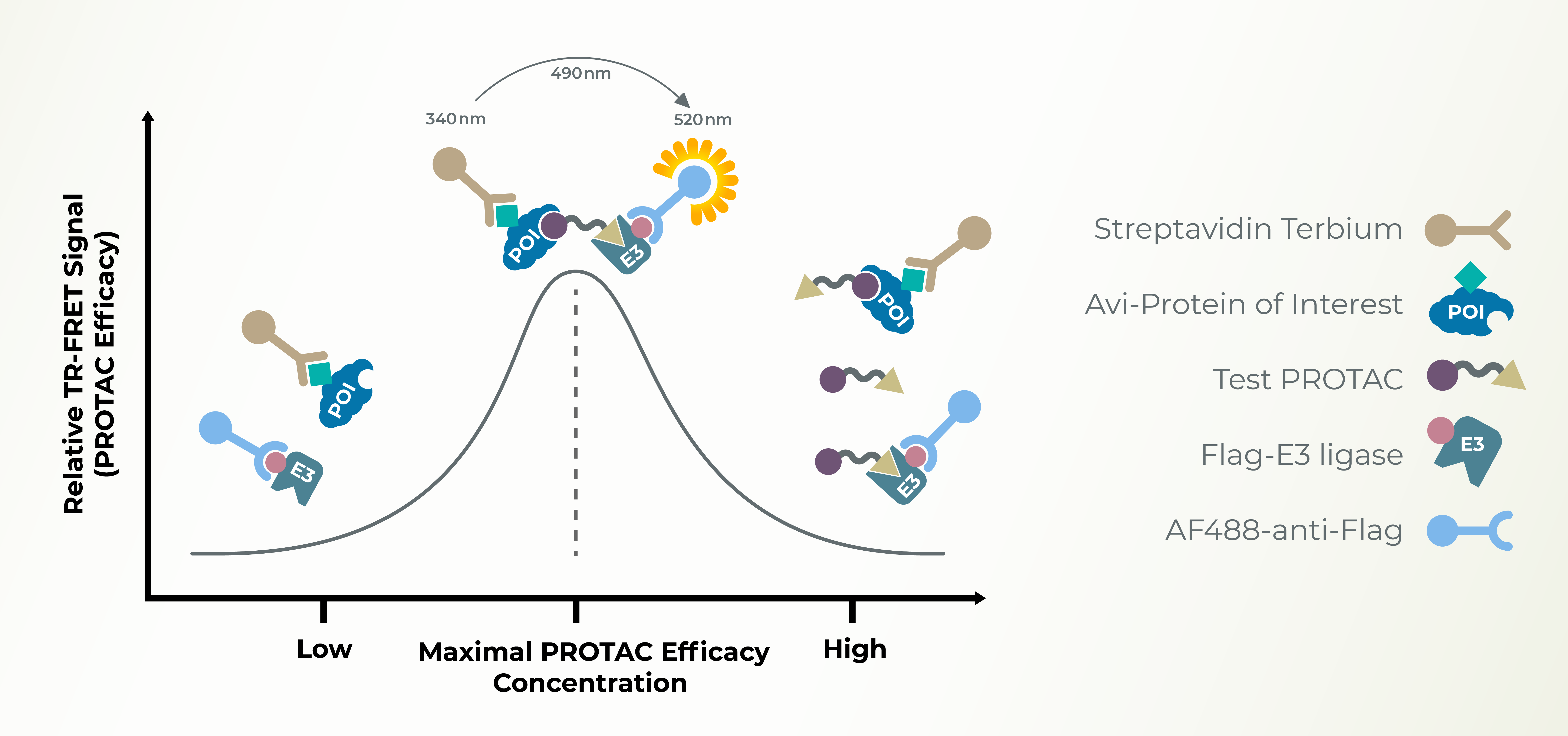
Evaluate relative population of ternary complexes and correlate with ubiquitination potential
Extensive E3 Ligase Access
Access to approximately 30 E3 ligases to study selectivity
- Related Products
- TUBEs
Tandem Ubiquitin Binding Entities
Product / Tools Name
SKU
Categories
Add to cart
- E3 Ubiquitin Ligases
Related products are displaying below
Product / Tools Name
SKU
Categories
Add to cart
- Research Publications